The Eight-Year Rhythm of Planetary Motion
On October 23 and 24, the planet Venus aligns directly with the Sun at zero degrees Scorpio. This specific celestial event marks the midpoint of the current Venus retrograde period. Astronomers note that this conjunction signifies a pivotal shift in planetary visibility. The timing creates a rare window where a new Venus cycle officially commences. This moment serves as a critical turning point for observers tracking celestial movements.
Daily readings
 Leo Moon Marks the Final Quarter of the Lunar Month
 Tracking Retrogrades With Real Precision
 November 2026 Horoscopes: What the Stars Say for Aries
 November 2 Birthday Forecast: What 2026‑2027 Holds for Those Born on This Day
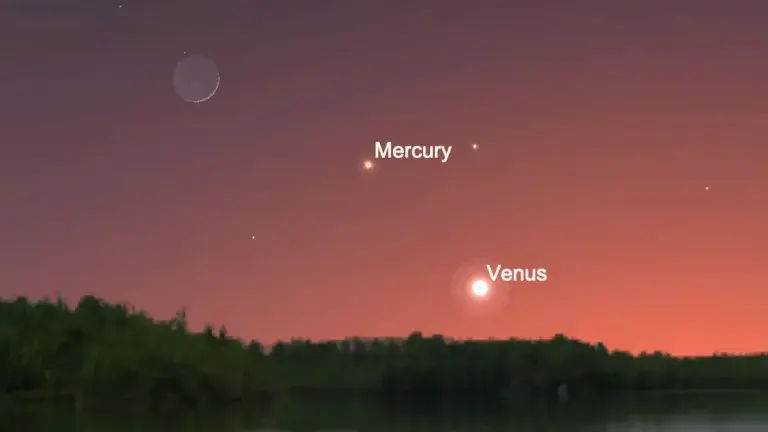
The alignment transforms Venus from an evening star into a morning star. This transition occurs precisely because the planet crosses the solar disk during its retrograde motion. Such events are infrequent and carry significant weight in astrological and astronomical calendars. The zero-degree position in Scorpio adds symbolic depth to the occurrence. This is the final time a Venus cycle will initiate in this zodiac sign for a considerable duration.
Venus follows a complex path across the sky governed by an eight-year cycle. This rhythmic pattern dictates how the planet interacts with other celestial bodies. The current movement represents a specific phase within this larger temporal framework. Understanding this rhythm helps explain why the current alignment feels distinct. The planet’s journey is not random but adheres to strict mathematical laws.
Why This Alignment Matters for Future Cycles
Because this is the last cycle starting in Scorpio for a long time, the implications are profound. Observers may view this as a closing chapter for this particular zodiacal influence. The shift to the next sign will bring different energetic qualities to the sky. This transition requires patience and careful tracking by enthusiasts. The rarity of the event ensures it remains a focal point for study.
The conjunction at zero degrees Scorpio acts as a bridge between two distinct periods. It ends one era of Venusian influence and opens another. This boundary marker is crucial for predicting future celestial behaviors. The shift from evening to morning visibility changes how we perceive the planet. It alters the times when Venus can be observed clearly.
This specific configuration sets the stage for upcoming planetary interactions. The retrograde motion continues, but the directional change is now locked in. Future cycles will follow a different trajectory than those previously recorded in Scorpio. The data collected during this period will inform models for decades to come. It provides a baseline for comparing subsequent Venusian movements.
The consequences of this shift extend beyond simple observation. It influences how astrologers interpret personal charts and global trends. The outlook suggests a period of transition and reflection. As the new cycle begins, attention turns to the coming months. The sky will continue to evolve, but this moment stands out as a definitive end to a long-standing pattern.
Frequently Asked Questions
When exactly does the Venus cycle begin? The new cycle starts on October 23 and 24. This date coincides with the conjunction of Venus and the Sun at zero degrees Scorpio.
How long does the Venus cycle last? Venus operates on an eight-year rhythm. This long-term pattern governs its movements and interactions with the Sun.
Is this the only time Venus starts a cycle in Scorpio? No, but it is the last time for a very long period. Future cycles will begin in different zodiac signs.