Two Traditions, Two Different Questions
The full moon of 26 September 2026 peaks at 12:49 PM Eastern time, turning tonight into a unique opportunity for a simple, budget-friendly practice. Because the sky will already be fully illuminated by sunset, you have a clear interval for reflection, regardless of whether you have just finished dinner, work, or daily chores. The essence of this ceremony lies not in clockwork precision, but in using that intense light to ask two fundamental questions: what have we concretely achieved this year, and who holds the right to share these rewards?
Daily readings
 Leo Moon Marks the Final Quarter of the Lunar Month
 Tracking Retrogrades With Real Precision
 November 2026 Horoscopes: What the Stars Say for Aries
 November 2 Birthday Forecast: What 2026‑2027 Holds for Those Born on This Day
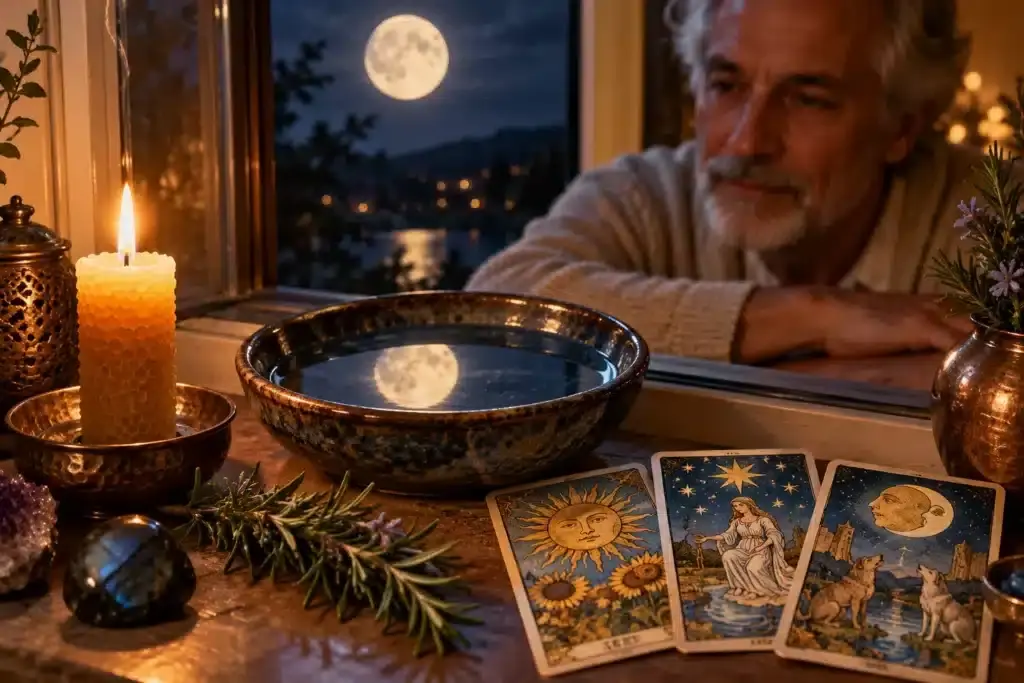
A harvest moon ritual should be free. If a practice requires spending about forty dollars on accessories, it becomes a consumerist hobby rather than a spiritual ceremony. Tonight, forget the shopping list. All you need is a sheet of paper, a writing instrument, a cup or a bowl, and twenty minutes of your time. If you want to create a specific atmosphere, you can use a lamp, a candle, or even a bowl of tap water placed on the windowsill; even if the light reflects imperfectly, the effect remains sufficient. The first time I tried this method, I had no candles, crystals, or dedicated journal on hand, so I managed with a kitchen timer and the back of an envelope. I spent twenty minutes, made a single list, and spoke aloud as I crossed one item off it.
Ever since, although I have acquired the premiumversion of all materials, I always return to the simple envelope. For those who appreciate seasonal symbolism, this practice can join the equinox celebration and its associated books. Yet the central message remains unchanged: the initiation of the harvest ritual starts from the attention you pay, not the objects you gather.
The Twenty-Minute Step-by-Step Practice
There are two distinct traditions that view the same moon but pose two different questions. The underlying astrology of this lunation specifies the degrees, and the ritual works more effectively when you know what influences surround you. In my experience, most people skip straight to the sharing phase because the inventory process is the uncomfortable part. Yet you must do that math. The European harvest tradition focuses on evaluating the year's results. This involves naming facts, not harshly judging yourself. You notice what grew, what failed, what cost too much, and what deserves care before thoughts of winter settle in. In parallel, the East Asian tradition, marked yesterday on 25 September, emphasizes sharing and reunion. It questions who sits at the table, who should be remembered, and what sweets can be passed along. Although both observe the same celestial sphere, their questions diverge.
Therefore, the contrast in tone is useful: first count the harvest, then distribute the meaning. A ritual covering only one of these halves tends to become incomplete. Isolated counting turns into a personal audit of the year, an activity few appreciate at nine o'clock at night. Isolated sharing becomes a pleasant evening, forgotten by Monday, which no longer constitutes an authentic harvest ritual.
The twenty-minute version is precisely structured. Setting a timer is not random. The duration is short enough to convince you to start on a busy Saturday night, yet long enough to prevent automatic completion. I tested the ten-minute version, which boils down to a simple to-do list, and the one-hour version, which becomes a form of avoidance accompanied by candles. In the first minute, place the paper, pen, and water within reach. Before starting, place your phone screen-side down. This action creates a boundary, a small margin around your attention. Between minutes 2 and 6, write the question: „What did this year produce?”List real things: paid bills, hard conversations, better sleep, a blocked project, or a friendship that survived. Avoid ornamenting the truth with excessive details. Minutes 7 through 10 represent the heart of the ritual.
What If You Cannot See the Moon?
Circle three lines: one for something you are proud of, one for something unfinished, and one for the lesson learned the hard way. Between minutes 11 and 14, write: „Who shares this harvest with me?”Add names, groups, ancestors, colleagues, neighbors, or a single person who made life easier. Then, choose a simple action of thanks. In minutes 15 through 17, cross out a burden you no longer need to carry into the next season. Say it aloud, if your context permits. For extra support in the release process, explore the concept of letting things go to pave the way. In the final three minutes, between 18 and 20, drink the water, wash the bowl, or fold the paper. Finally, select a single action for tomorrow that takes less than fifteen minutes. You are not here to manifest miracles, but to create a short and honest record.
What do you do if you cannot see the moon? I notice this is where many people give up, which is unfortunate because it is the easiest problem to solve. Clouds do not cancel the moon's presence. Neither does a window in a busy city. The night shift, rain, bright buildings, and tired eyes are all acceptable. The moon is still in its full phase, and if you want simple facts about the sky, check what is actually happening up there. The ritual does not require the moon to visually cooperate, which is precisely the point of anchoring it to a date rather than a view. If you cannot go outside, face any window. If there is no window, look at a wall and lower the lights. Though it seems too simple, this approach keeps the practice accessible at any time.
Why does this ritual work without requiring belief? I am not entirely sure if the moon does anything active.